The useful bit, first
- Choose vertical storage for a specific category instead of filling every empty wall.
- Keep frequently used and heavier objects within a practical, comfortable reach.
- Check installation and anchoring requirements before buying tall or wall-mounted storage.
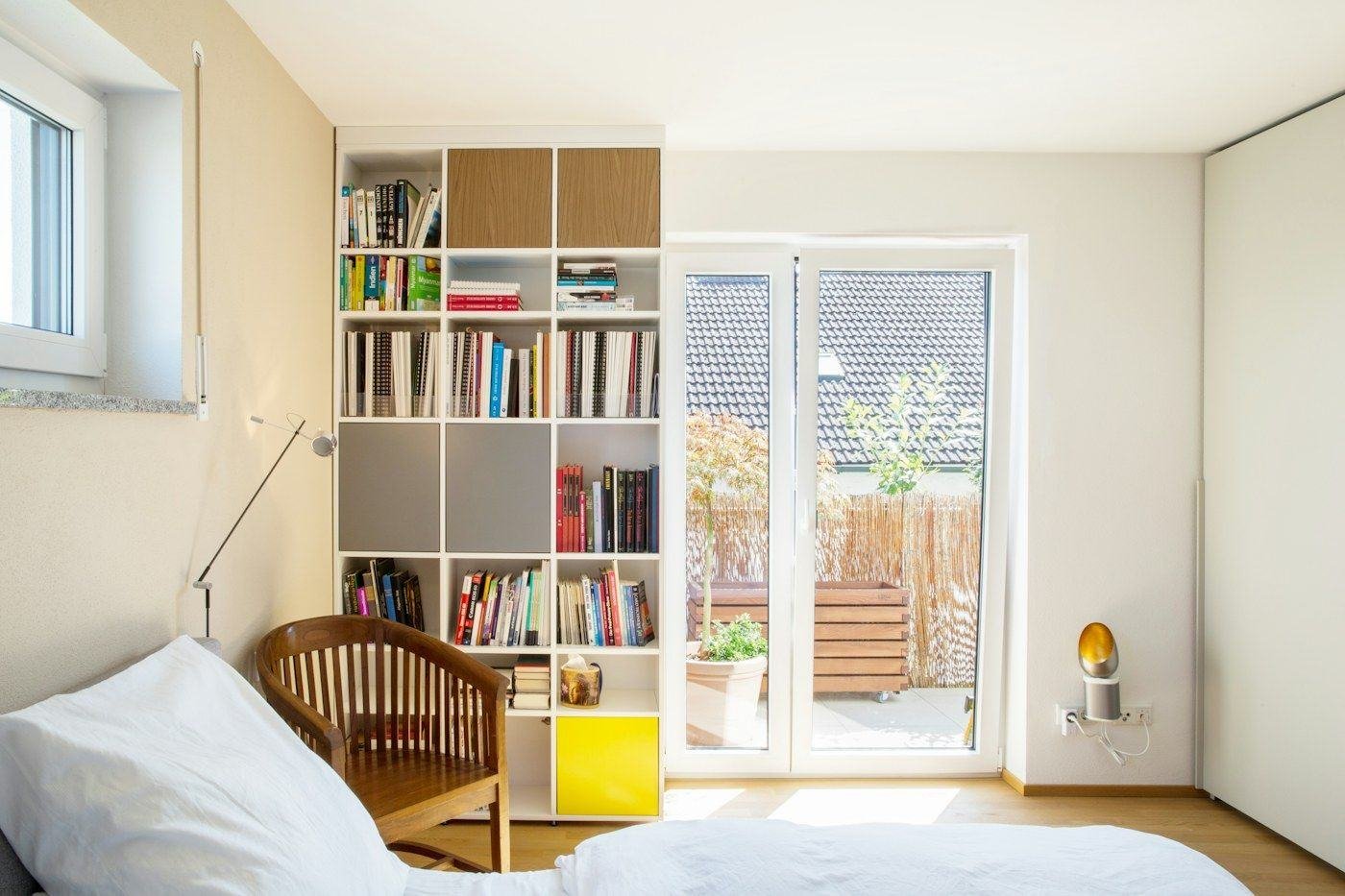
When floor space is scarce, using height seems like an obvious answer. A tall bookcase can hold more than a low one on a similar footprint, and a shelf can use a wall without occupying the floor. Yet adding storage all the way up every wall can make a compact room feel busier and make daily items harder to reach.
Good vertical storage has a clear purpose, a suitable installation, and an access plan. It should take pressure off the room below without turning the room above into an unmanageable collection. Start with one category and one wall, then test how that addition changes the space.
Identify the job before choosing the height
Write down what you need to store. Books require a different shelf from folded textiles, and a collection of small work supplies does not need the same depth as a large appliance. The category tells you whether a tall unit, a short shelf, or a closed cabinet is useful.
Estimate the actual quantity. If the problem is six folders and a laptop bag, a floor-to-ceiling shelving unit may add more bulk than the task requires. If you have a substantial book collection you use regularly, a properly planned taller unit may justify its presence.
Think about the surrounding activity. Storage beside a desk should support work. Storage above a dining area may hold occasional serving pieces or display a few appropriate objects. Giving a unit a defined job makes it easier to decide what belongs there and prevents it from becoming a home for every remaining object.
Choose depth as carefully as width
Deep shelves offer capacity but can project into the room and hide smaller things at the back. A shallow unit may suit paperback books, documents, or small baskets more comfortably. Measure the largest object in the intended category before choosing the shelf depth.
Record the footprint with doors or drawers open. A tall closed cabinet can keep packaging out of sight, but it still needs a working area in front. Check adjacent doors, curtains, furniture, and the route used when carrying objects. A narrow unit can be inconvenient if its door opens across the only passage.
Use tape or cardboard to show the full outline. Stand at the entrance and at the normal seated position. Does the proposed depth feel intrusive? Does it hide a window or an important view through the room? A few inches saved by choosing an appropriate depth can matter more than gaining one extra shelf.
Allocate heights according to the user
Reserve comfortable reach for objects used often. Put occasional lightweight items higher only when they can be retrieved appropriately. The right height differs between people, so check the arrangement with everyone who will use it rather than assuming a particular measurement works universally.
Consider the complete action. Removing a basket requires lifting its weight, bringing it forward, and finding a place to set it down. A shelf that can be touched is not necessarily a shelf from which a full basket can be handled comfortably. Keep heavy or awkward items in locations that do not demand difficult overhead lifting.
Do not create a system that relies on climbing a chair or shelving unit. If access needs suitable equipment, decide where that equipment belongs and whether the task is reasonable in the room. Items needed every day generally deserve an easier destination than a high shelf reached only after a separate setup.
Resolve attachment and anchoring before purchasing
Wall-mounted storage needs a suitable wall, appropriate fixings, and installation according to the product's directions. The condition and construction of the wall matter, and a shelf's stated load is not permission to use an unsuitable attachment method. Get appropriate help when installation requirements are beyond your knowledge.
Tall freestanding storage can also have anchoring requirements. CPSC's Anchor It guidance advises securing furniture according to manufacturer instructions. An anti-tip arrangement is part of the furniture's setup, not an accessory that can be substituted with a decorative weight or improvised strap.
For a rental, check the permitted installation and repair process before buying. If suitable anchoring cannot be arranged, choose a different solution that is appropriate to use in the available conditions. Do not assume a tension product, adhesive, or freestanding design is suitable merely because it avoids a drilled hole.
Break up a wall with purposeful closed storage
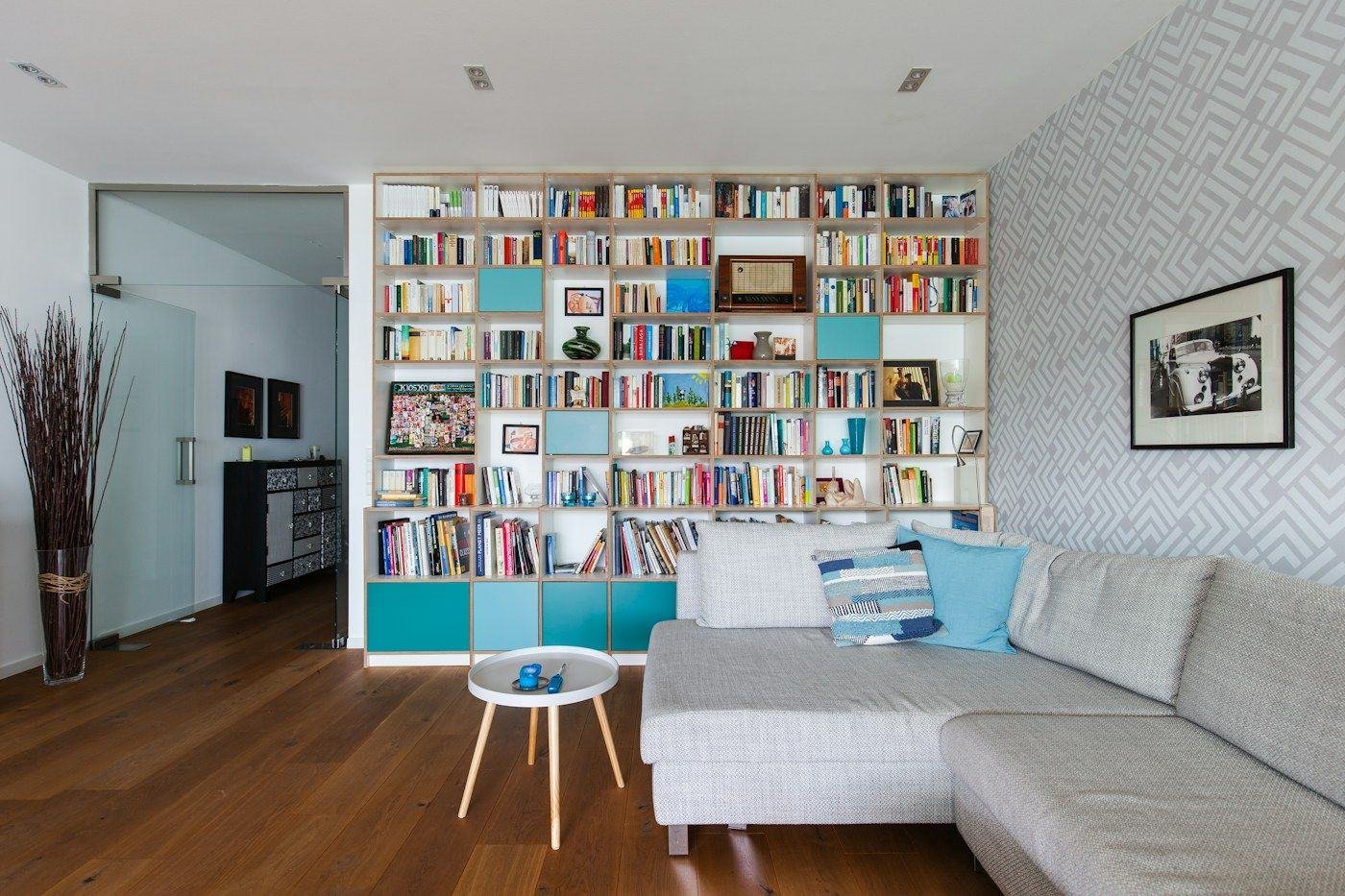
Open shelves expose every spine, label, cable, and package. That can be attractive for a coherent collection and distracting for a mixture of household supplies. Closed sections are useful when the contents vary in appearance or need privacy.
You can combine open and closed areas without making the arrangement complicated. Books might occupy two open shelves while work supplies sit in a labeled box below. A cabinet at the bottom can hold appropriate occasional items. Leave enough space around containers to retrieve them rather than treating the shelf as a tightly fitted display.
Avoid buying a separate basket for every tiny category just to make a wall look uniform. Containers need to earn their space by keeping something together or making retrieval easier. One sensible work basket may be more useful than six matching boxes whose labels must all be read to find a charger.
Keep useful empty areas in the composition
Empty wall space can help a room feel settled. You do not need to fill every gap around the television, doorway, and window. Choose a main storage area and let neighboring surfaces remain simpler when possible.
On an open unit, a little room around objects also supports use. You need space to remove a book, lift a box, or place something briefly while sorting. An arrangement that works only when every item stands in exactly the right position may be too full.
Look at the room at different times of day. Shelves near a window may affect light and curtain movement. A tall unit beside the place you sit can dominate your view more than it does from the doorway. Adjust its position or scale while the plan is still inexpensive to change.
Put a return destination beneath the storage
Think about where a container lands after it comes off the shelf. At a desk, the work surface may be enough. In a narrow hallway, you may need to avoid baskets that require unpacking because there is nowhere convenient to put them.
Do not plan to leave a pulled-out box on the floor in an essential route. A shallow drawer or smaller portable container may be easier than one large high basket. The usable capacity of vertical storage includes the ability to handle its contents in the room below.
If you use the shelf for a rotating project, give that project an identifiable container. Return it to the same position after use. This helps the shelf remain part of a routine rather than becoming a display you dismantle whenever real life needs the objects.
Reassess the wall after living with it
After a few weeks, note which shelves are easy to use and which attract abandoned items. A high shelf full of daily supplies suggests the allocation is wrong. An empty lower compartment may be able to take that category instead.
Remove objects that do not serve the unit's job. Update labels when categories change and follow the product's maintenance and load guidance. If shelves, attachments, or the furniture itself show a problem, address it before adding more contents.
Vertical storage works best when it feels ordinary to use. The room gains capacity, the walking space stays comfortable, and the items you need do not move farther out of reach. More height is useful only when the extra space supports those outcomes.
Sources & further reading
For the factual or product-specific points referenced in this guide. Check the current instructions for your own products and space.
Make it work for your home.
These are planning ideas. Your room, your routines, and your product instructions come first.Our guides are researched and developed with AI assistance, then reviewed for usefulness, clarity and consistency. Read our editorial policy.