The useful bit, first
- Plan drying and putting away before starting a wash, not only the machine stage.
- Keep detergent in original packaging and secure it beyond access by children and pets.
- Choose loads and temporary surfaces that fit the machine instructions and the space available.
Laundry uses space at several different moments: clothes wait for washing, travel to the machine, dry, get folded, and return to storage. A home without a laundry room may handle each stage in a different place. The routine works when those stages connect, not when a beautiful basket simply hides the first pile.
You can plan around a machine inside the apartment, a shared building laundry, or a laundromat. Start with the constraints that are real for you: access times, carrying distance, drying options, household quantities, and where clean clothes can be put away. That will tell you which equipment and habits are useful.
Choose a collection point that stays manageable
Put the main laundry basket where used clothes naturally arise, provided the location remains appropriate and does not obstruct access. In a small home, one well placed basket may be easier than several partly filled ones. More than one can still make sense when different people or routines need separate collection.
Measure the basket in use. A flexible bag may bulge wider when full, while a rigid basket keeps the same footprint. Check carrying comfort, handles, and whether it passes through the doorway. A basket that is difficult to carry may become permanent storage rather than part of the washing routine.
Keep damp items in their appropriate drying or washing stage rather than sealing them inside a crowded bag. Leave clean laundry out of the used-clothing collection. These distinctions reduce confusion even when the same room has to support several stages.
Sort according to care needs and the next wash
Read garment care labels and use the machine instructions when planning loads. Sort in a way that reflects those needs instead of relying on an elaborate permanent set of bins. Some households can sort just before washing; others find a small separate bag for a particular care category useful.
Keep any items awaiting a stain-treatment or special-care decision identifiable. Follow the relevant product and textile instructions. Do not add an uncertain item to a routine wash just to empty the basket.
An uncomplicated system can use one main basket and one small appropriate container for the separate category you genuinely need. If you routinely create five tiny piles that cannot make useful loads, reassess the sorting and schedule without overriding care requirements. The routine should fit the clothes you own and the facilities you use.
Plan the carrying kit for shared laundry
If you leave the home to wash, keep the necessary kit together. It might include the appropriate payment method, a laundry bag, products in their original containers, and a small pouch for useful nonchemical accessories. Check the facility's current rules and machine instructions when you use it.
Choose a carrying arrangement you can manage through the actual route, including stairs or public transport. A wheeled option may help some routes and be inconvenient on others. Do not fill it beyond what you can handle comfortably simply because a large bag has remaining capacity.
Have an appropriate clean destination for the return trip. Keep washed and fully dried clothes separate from dirty items and avoid placing them on unsuitable public surfaces. A bag or basket should suit its material care needs and the stage it serves, not merely hold the quantity.
Store laundry products securely in original packaging
Keep detergent and other laundry products in their original labeled containers, follow the storage directions, and secure them beyond access by children and pets. A decorative open shelf or glass jar is not an appropriate upgrade for concentrated products.
The American Cleaning Institute specifically advises keeping liquid laundry packets in their original container and out of children's reach and sight. Preserve the closure and labels, and return the container promptly after use. Secure storage still matters in a home where children only visit occasionally.
Keep laundry products separate from food and clean personal textiles. If they live in a suitable household-products cupboard rather than beside the machine, that is fine. Carry out only what the task needs and return it afterward. A small home does not need all washing supplies permanently displayed near the laundry basket.
Use the machine as directed
Consult the specific appliance instructions for loading, cycles, detergent compatibility, and maintenance. Whirlpool's detergent guidance emphasizes following the product label for the load and soil level. More product is not a storage or schedule solution; use the amount appropriate to the instructions.
If you are considering a new machine, its installation requirements are part of the decision. GE notes that clearance needs vary by appliance and model. Check the complete installation guidance and use the appropriate qualified help for connections and setup. A compact outside dimension does not tell you every requirement.
Do not use a machine's surrounding space as a makeshift cupboard if doing so blocks required access or airflow. Keep its controls and maintenance points available. The laundry routine should work with the installed appliance's conditions, not force it into a tighter decorative arrangement.
Decide how the load will dry before washing it
Drying capacity can be the limiting stage in a small home. If you air dry, check how much suitable space the rack provides and what the garment care instructions require. Measure the rack open and consider the walking route, furniture access, and where it goes when folded.
Drying clothes indoors adds moisture to the room. EPA moisture guidance supports managing ventilation and humidity appropriately. If the area stays damp or shows a persistent moisture problem, address that condition rather than simply fitting in a larger rack. Keep textiles away from unsuitable heat sources and use drying equipment according to its intended purpose.
For a dryer, follow the machine guidance and maintain the lint filter as directed. The U.S. Fire Administration advises cleaning the lint filter before use. Do not treat a drying cycle as something to squeeze into a crowded appliance area without considering those routine requirements.
Give clean clothes a temporary folding surface
A dining table, bed, or other suitable surface can serve for folding if it is clean, dry, and available. Clear it before the load finishes so the clean clothes do not remain in the carrying bag because the surface is occupied.
Choose a session size you can put away. A mountain of clean clothes may be harder to manage in a room that needs to return to another function soon. Folding and putting away a manageable category can be more useful than making neat piles that stay across the bed all evening.
Separate items by their destination as you fold. One person's drawer stack, another person's hanging items, and household linens can move to storage without being re-sorted. You do not need a specialized folding table if the temporary surface and return step are dependable.
Check the return space before the basket overflows
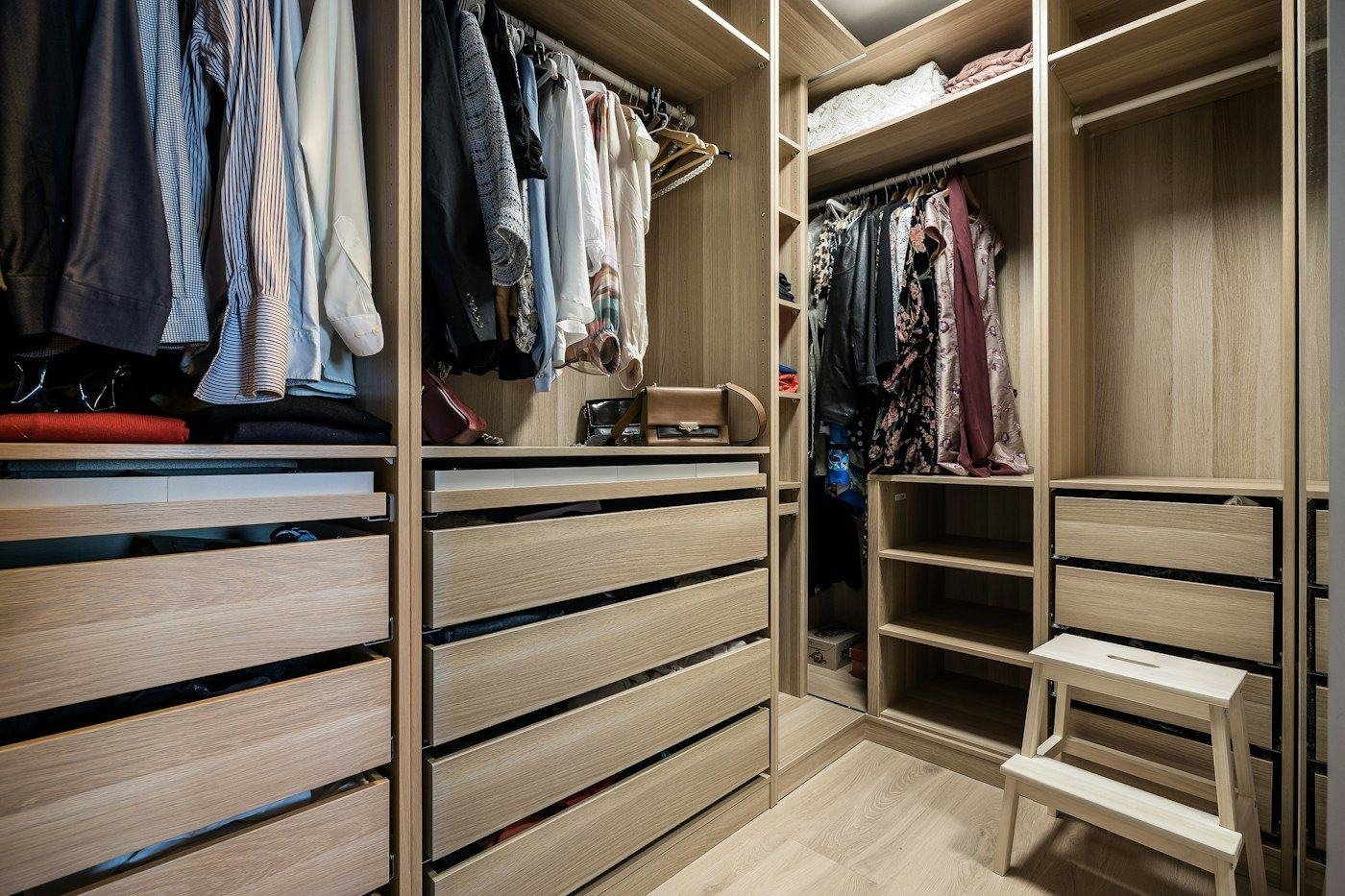
A full drawer can stop the final stage of laundry. When clean clothes repeatedly remain in a basket, inspect their storage as well as the laundry schedule. The drawer may be too tightly packed, the hanging space awkward, or the allocation unclear.
Keep enough usable space for the whole active collection, including items currently worn or waiting for washing. A wardrobe that fits only while half the clothes are outside it will predictably overflow on laundry day. Adjust the collection or its assigned space rather than accepting the basket as a second wardrobe.
Build a simple end point: dry items returned to storage, the folding surface restored, the basket available for its next job, and products secured. The home can then move back to eating, sleeping, or working. That clear finish is what makes laundry manageable without a room dedicated to it.
Sources & further reading
For the factual or product-specific points referenced in this guide. Check the current instructions for your own products and space.
Make it work for your home.
These are planning ideas. Your room, your routines, and your product instructions come first.Our guides are researched and developed with AI assistance, then reviewed for usefulness, clarity and consistency. Read our editorial policy.