The useful bit, first
- Assign storage close to the activity it supports, rather than filling every available corner.
- Reserve the easiest places for frequently used items and keep reserve stock separate.
- Test your plan with existing boxes before buying furniture or matching organizers.
A small home can hold a surprising amount, but capacity is only half the problem. If you have to move a chair, lift three boxes, and unpack a bag to find your sewing scissors, those scissors have a location without having a useful home. A storage plan should make ordinary actions easier: coming home, cooking dinner, changing the sheets, getting dressed, and clearing the table afterward.
Start with the friction you already notice. Perhaps shoes spill into the doorway while a cupboard upstairs contains unused serving bowls. Perhaps a large ottoman stores spare cushions beautifully but leaves no place for the laptop you use every evening. These are allocation problems. You do not necessarily need more storage. You may need to give the storage you have a different job.
Map activities before measuring shelves
Draw a simple outline of your home and mark its main activities. Precision is not important yet. Write entry, sleep, dress, cook, eat, wash, work, relax, and laundry wherever those things actually happen. A dining table can have two labels. A hallway cupboard might serve three neighboring rooms.
Beside each activity, list the objects that travel with it. Working at the table might involve a laptop, charger, notebook, headphones, and a document folder. Rather than spreading those across four cupboards, your first idea might be a portable work basket that lives in the nearby sideboard. The basket is not the plan; keeping a complete work setup near its destination is the plan.
Watch an ordinary weekday as well as a quieter weekend. Where does the shopping bag land? Where do you put clothes that have been worn briefly but are not ready for washing? Where do parcels wait until someone opens them? Those temporary states need space too. A home becomes difficult to maintain when every object must jump directly from use to perfect final storage.
Make an inventory small enough to finish
You do not need to catalogue every fork. Inventory one troublesome category at a time: coats, towels, paperwork, pantry staples, hobby equipment, or cleaning tools. Group the items physically if you can do so without disrupting the whole room. Count broad quantities and note the largest object in each group.
A useful note might read: two everyday backpacks, one folding shopping bag, one umbrella, and six pairs of shoes used this week. That gives you a practical entryway brief. A less useful note is: need a bigger hallway cabinet. The first describes a need; the second commits to a purchase before you understand it.
Identify duplicates without forcing a decision immediately. Two phone chargers in different rooms may serve a purpose. Five near-identical storage tubs may be leftovers from moves. Keep a separate list of uncertain items and revisit it after the active categories have homes. Getting stuck on one sentimental box should not prevent you from solving the daily shoe pile.
Sort by frequency, then by effort
Divide belongings into daily, weekly, occasional, and reserve groups. The boundaries are flexible. A baking tin used every weekend deserves better access than a holiday platter, even though both belong to the kitchen. Winter gloves become daily items in cold weather and occasional ones later.
Frequency alone does not tell you everything. A heavy appliance used twice a month can be awkward to lift down from a high shelf. A lightweight spare blanket might be easy to fetch from the same position. Think about weight, reach, grip, visibility, and the movements required to retrieve each item. If more than one person uses a category, assess access for both people.
Keep daily objects where they can be reached and returned with few steps. Put occasional light items farther away or higher up when that is appropriate for the person using them. Avoid turning awkward spaces into destinations for things that must be handled often. No storage plan should require climbing on furniture or reaching around an unstable pile.
Give prime storage a specific job
Prime storage is the comfortable drawer, the shelf you can see, the cupboard beside the task, or the hook near the door. It is valuable because it reduces effort, not because it is large. Once you recognize that, you can stop using an accessible drawer for objects that have not been touched in years.
For example, the lowest drawer of a sideboard might hold the papers and chargers needed for table work. The deeper cupboard can hold board games. A high shelf can hold a labeled box of spare party supplies. This uses one piece of furniture for three activities without mixing the activities together.
Write a short job description for each area: daily work kit; clean bath towels; breakfast ingredients; outgoing errands. Broad labels such as miscellaneous invite everything to accumulate. Equally, a category can be too narrow. An entire drawer labeled spare pens wastes space if you own six pens. Aim for a category that is easy to understand and fits the quantity you actually have.
Separate active items from reserves
A small kitchen does not need three spare dish soaps beside the sink. A bathroom drawer does not need every unopened shampoo bottle alongside the one in use. Keeping reserves apart makes it easier to see what is active and what needs replenishing.
Give reserve stock a defined area, perhaps a shelf in an existing cupboard. Keep products in their appropriate original packaging, and follow any label storage requirements. Use a simple first-in arrangement: bring older purchases forward when adding a replacement behind them. This is an organizing habit, not a substitute for checking product condition or dates.
Set a reserve limit that reflects your actual space. One spare package may be more sensible than a large multipack that has no appropriate home. A discount can lose its appeal when the purchase occupies the laundry basket for three months. Compare the savings with the inconvenience before bringing a bulk order inside.
Account for awkward objects honestly
Long, bulky, or oddly shaped items often derail otherwise good plans. A vacuum, drying rack, sports bag, suitcase, or folding chair cannot be organized away with a tiny basket. Measure these objects and consider whether they need to be stored standing, lying down, or folded.
Look first at spaces close to their use. A folded drying rack might fit beside a wardrobe if it can be removed without scraping the door. A suitcase may fit under the bed, but only if it can come out without disassembling the room. A vacuum may belong in a different cupboard from its small accessories. Keep the accessories together in a clearly labeled pouch nearby.
Do not let an awkward object block access to several useful shelves. If it has to move every time you need towels, the whole cupboard becomes inconvenient. You may prefer a slightly less tidy visible location that works daily over a hidden location that repeatedly fails. Choose deliberately rather than accepting whichever corner remains empty.
Choose open and closed storage for different reasons
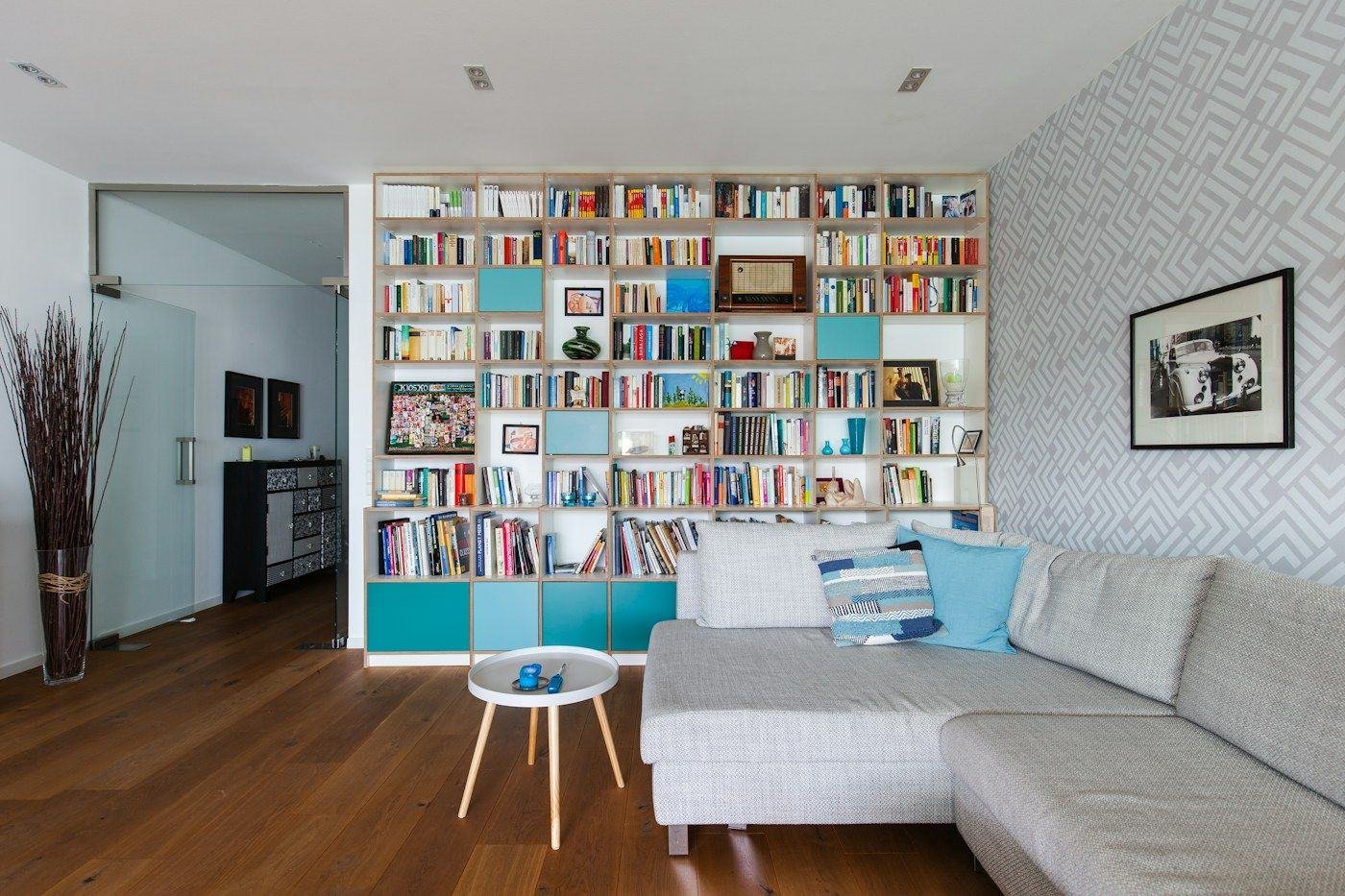
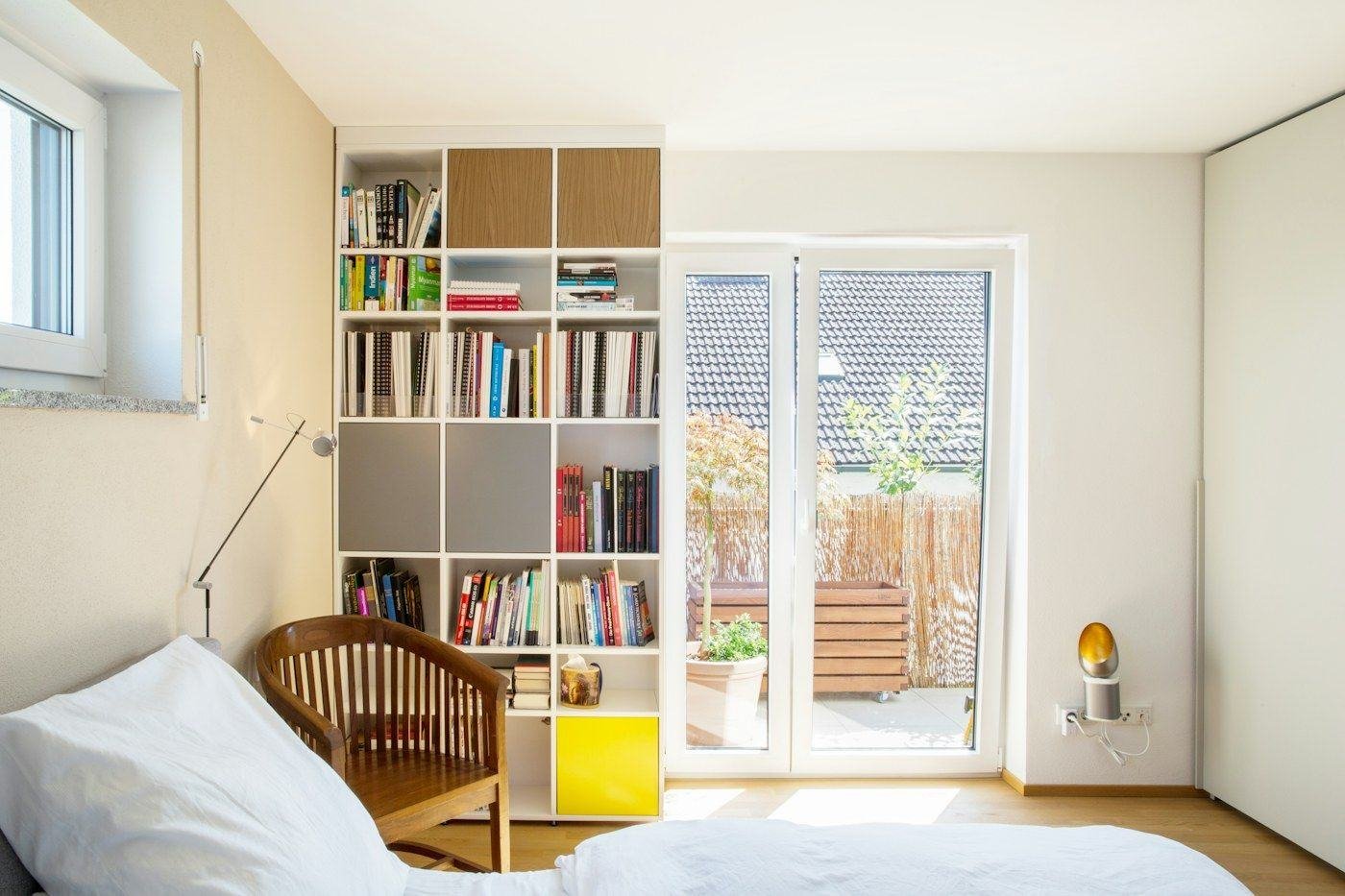
Open storage makes a small collection easy to see and grab. It works well for a few books, a daily basket, or items whose appearance you enjoy. Closed storage is useful for varied packaging, paperwork, cables, and reserve stock that create visual noise.
A shelf does not need to be filled to prove that it is useful. Leave room for taking a basket out and setting it down. Behind a cupboard door, leave enough space for your fingers and for packages that change size. A container packed tightly enough to photograph beautifully may be frustrating to use while holding laundry with the other hand.
Mix the two approaches according to the room. In a studio, closed storage near the sleeping area can help the room feel settled at night. Beside a desk, an open shelf can keep one active project handy. Avoid deciding that every belonging must be displayed or that every belonging must disappear. Different activities benefit from different levels of visibility.
Measure usable space, not the furniture listing
A cabinet's outside width does not tell you which basket will fit inside it. Record internal width, depth, and height; door openings; hinges; shelf supports; and any pipes or other obstructions. Drawers also need space outside the cabinet when opened.
Measure the route as well as the destination. A rolling under-bed box must pass the bed leg and travel across the floor. A cupboard basket may fit on a shelf but become impossible to remove because the door does not open wide enough. A storage bench may be perfectly sized yet block the entrance when its lid is raised.
Use cardboard, existing tubs, or folded paper to simulate the proposed organizer. Live with that rough version for a few days. If the box remains easy to use, you have learned something valuable before spending money. If it gets abandoned, change the position or category instead of buying a more attractive version of the same failed arrangement.
Plan for safe furniture and clear routes
Storage should not narrow essential routes, cover ventilation openings, or turn doors into obstacles. A space that looks empty may serve a purpose when someone is carrying groceries or leaving the home. Preserve access to equipment that must be reached for maintenance, and keep manufacturer clearances in mind.
For freestanding furniture, check the instructions for anchoring and placement. CPSC's Anchor It campaign advises securing furniture and televisions according to manufacturer directions. Treat that as part of planning a unit, rather than an optional finishing touch. If a rental needs permission or suitable help for anchoring, resolve that before choosing furniture that requires it.
Containers also need limits. A basket for papers should not become a mixed store for food, cleaning chemicals, and spare batteries. Keep categories with different storage needs separate. The aim is a useful place for everything, not a place that happens to accept everything.
Build a return path for temporary clutter
Give items that are in transit a small, visible destination. One outgoing bag can hold returns, library books, and things to take to a friend, provided nothing in it needs special storage. A document tray can hold papers awaiting a decision. Clothes waiting for another wear can have a designated hook or hanger instead of drifting across several chairs.
Choose a limit and a review moment for each temporary area. An outgoing bag that never leaves the house is simply another storage category. Check it before your regular errands. Review the paper tray during a short weekly session. Put the reminder where the action happens, rather than designing a complicated tracking system.
Do not use the temporary area as punishment for things you cannot decide about. If an object sits there for several weeks, ask whether it needs a permanent home, a different owner, or a clearer next step. Uncertainty is easier to handle when it is visible and bounded.
Try a seven-day reset before adding furniture
Choose three improvements rather than attempting the whole home at once. You might move active work supplies closer to the table, give the entry a shoe limit, and relocate reserve toiletries. Keep the first version simple, even if the containers do not match.
After a week, look for evidence in your routine. Are keys easier to find? Can the table be cleared without visiting four cupboards? Does clean laundry now have somewhere to go? Notice what still lands on the floor. That landing spot often tells you that the assigned home is too distant, too full, or too difficult to open.
Only then decide whether a purchase would solve a remaining problem. You may need a shallower basket rather than a larger cabinet, or a hook rather than an entire bench. Spend on the part that removes friction. A well chosen organizer can help; a shopping list written before the routine is understood often makes the home more crowded.
Keep the plan flexible as life changes
Storage needs change with seasons, work, hobbies, and the people living in the home. Leave a little unassigned capacity in accessible places so that a new project or school bag does not immediately overflow into the hallway. This does not mean maintaining an empty cupboard; it means avoiding a system that only works at perfect capacity.
Review one category when something changes. If working from home ends, the prime drawer can take on another daily job. If a child starts an activity, make space for the equipment before adding a new piece of furniture. If guests rarely stay, reconsider how much accessible storage is devoted to spare bedding.
A useful storage plan is recognizable in ordinary moments. You can find what you need, use it, and put it back without reorganizing the room. Matching boxes are pleasant, but that easy sequence is the real finish line.
Sources & further reading
For the factual or product-specific points referenced in this guide. Check the current instructions for your own products and space.
Make it work for your home.
These are planning ideas. Your room, your routines, and your product instructions come first.Our guides are researched and developed with AI assistance, then reviewed for usefulness, clarity and consistency. Read our editorial policy.