The useful bit, first
- Mark the rug footprint beneath the actual seating arrangement before shopping.
- Check door clearance, edge positions and compatibility with a suitable rug pad.
- Choose pile and care requirements around the way the room is used.
A rug can bring a small living room together, but an unsuitable one introduces a new set of problems. Its edge might curl in the doorway, the coffee table may look marooned on it or the pile may make a chair difficult to move. Size advice helps only when it is connected to your furniture and the shape of the room.
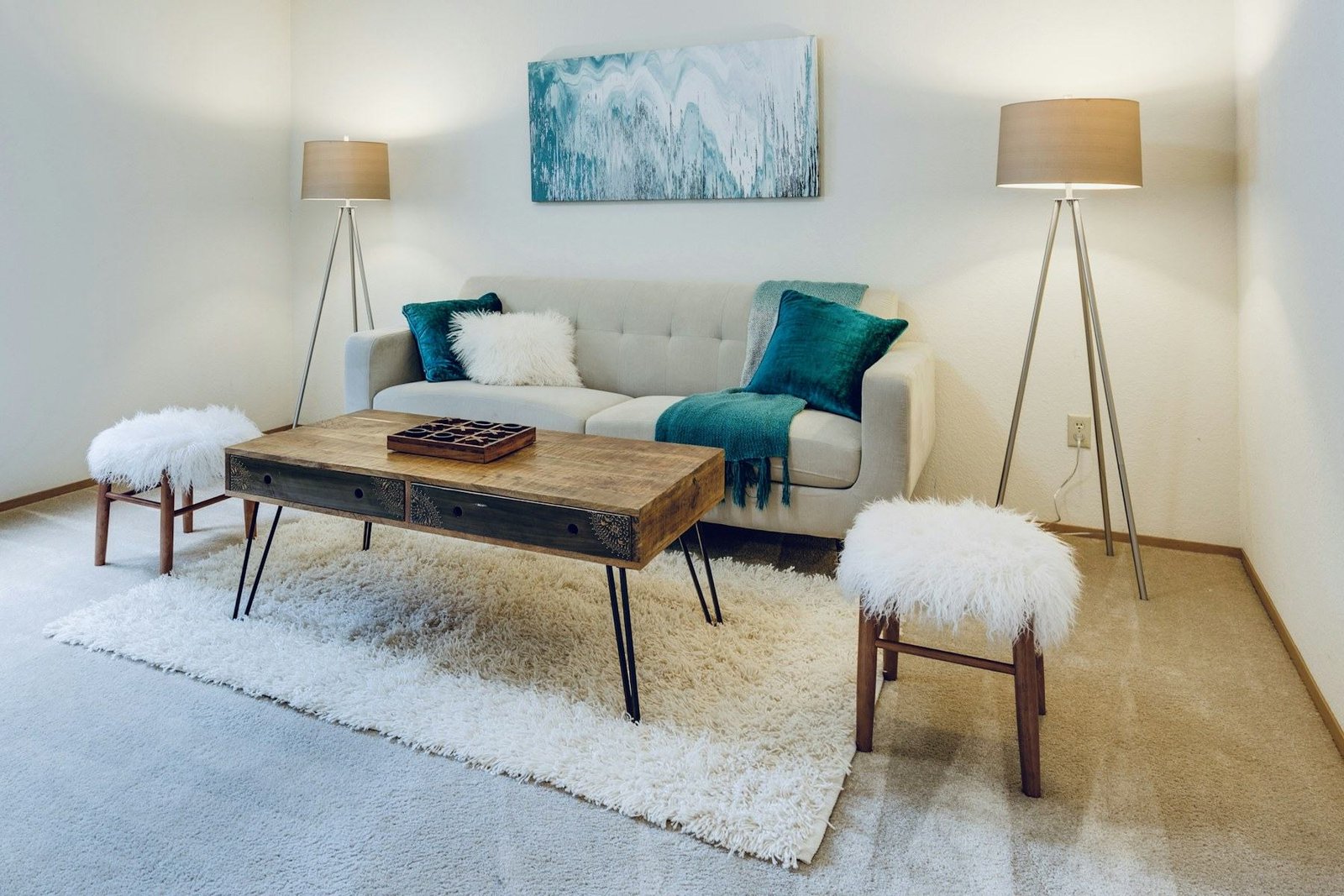
Begin with the seating arrangement you intend to keep. A rug can define that group; it cannot repair an obstructed walkway or make an oversized sofa suitable. Solve the layout first, then use the rug to give the useful space a clear visual boundary.
Decide what the rug needs to do
Name its primary job. Perhaps you want softness under bare feet, a warmer-looking seating area or some separation between living and dining zones. A busy household may prioritize easy cleaning. Someone who moves a desk chair through the same space may need a flatter surface. Different priorities can lead to different rugs even in identical rooms.
Look at where feet land when people sit and stand. If the rug is intended to feel comfortable underfoot, those positions matter more than centering it perfectly between four walls. In an open room, align it with the seating zone rather than the entire apartment. This lets the living area feel intentional without covering every available inch.
Consider whether a rug is necessary at all. Attractive flooring and a well-arranged seating group may already feel complete. A rug adds cost, maintenance and another surface to navigate. Choose it because it improves the room, not because every furniture photograph includes one.
Map three possible footprints
Try a rug large enough to include the front legs of the main seats, a larger version supporting more of the furniture and a smaller version contained within the seating group. These are visual experiments, not mandatory proportions. The right choice depends on the furniture spacing and available floor.
Use paper or a floor-safe marking method to outline each option. Leave the furniture where it normally sits and judge from the entrance as well as from a seat. A rug that seems enormous in an empty room may look balanced once the sofa overlaps it. Conversely, a size that appears generous online may become a small island between widely separated pieces.
Note the actual product sizes available. The best mockup may sit between standard dimensions, so compare the nearest alternatives before deciding. Do not fold a large rug under furniture as a substitute for a suitable size. A fold can create an uneven surface and complicate both stability and cleaning.
Check the borders that affect daily movement
Open every nearby door through its full swing. Account for the rug and pad thickness together. A fitting that barely clears a bare floor may catch even a modest pile. Check access to cabinets too, particularly low doors or drawers that pull toward the rug.
Locate rug edges in relation to turning points and common routes. An edge directly beneath a chair's front legs may move differently from one beneath the back legs. A loose corner beside the room's entrance needs attention rather than being dismissed as part of settling in. Follow the rug manufacturer's instructions for flattening and maintenance.
Choose a pad compatible with both the rug and the floor finish. Not every backing material suits every surface, and manufacturers may specify particular care or ventilation. Keep the pad beneath the rug edges according to its instructions. If a rug will not stay flat and secure in its intended location, reconsider the combination.
Compare pile and material through your routine
Lower-pile or flatwoven rugs are often easier to move furniture across, but the specific construction matters. Plush rugs can feel inviting under bare feet while requiring more attention to crumbs, debris and vacuum compatibility. Ask how the rug should be cleaned and whether your existing equipment is suitable.
Washable deserves a closer look. Check whether the complete rug fits your washing machine, whether the backing is washed separately and what drying method is required. A rug that is technically washable but needs equipment you do not have may be less convenient than a straightforward vacuum-and-spot-clean option.
Think about the likely mess rather than hypothetical perfect care. A seating area used for snacks, children's play or pet lounging has different demands from a quiet reading room. Request samples when possible and check texture, shedding information and cleaning guidance before making a large purchase.
Choose a pattern at the scale of the room
A small room can hold pattern. The question is how it interacts with everything already present. If the sofa, curtains and cushions are busy, a rug with a quieter design may give the eye somewhere to rest. If the furniture is simple, a patterned rug can supply character without adding more physical objects.
Look at the rug as a whole and as a cropped view beneath the furniture. The most attractive central motif in a product photograph may disappear under your table. A border design may be partially obscured by the sofa. Neither is necessarily wrong, but it is useful to understand what will actually be visible.
Colors on a screen are approximate. Compare a sample or returnable swatch with the sofa fabric, flooring and evening light. A cream that looks neutral in isolation can seem yellow beside cool gray upholstery. Rather than chasing an exact match, seek a relationship that looks deliberate under the room's real lighting.
Use shape to solve a particular layout
A rectangle often follows a sofa-and-chair group comfortably. A round rug can soften a compact conversational arrangement, but it does not automatically save space: measure the diameter and the furniture positions it reaches. An irregular rug may be distinctive while leaving awkward exposed edges at the places people walk.
In a long room, a rectangular rug can define one seating zone without covering the route beside it. For a loveseat facing a single chair, a compact rectangle may connect both pieces more effectively than a tiny circle centered on the table. Choose the footprint that serves the arrangement rather than selecting shape as a separate decorative decision.
Layering rugs can add texture, but it also adds edges and maintenance. For a first rug in a small, busy room, one suitable piece is usually easier to evaluate. If you do layer, check stability and thickness as a complete combination rather than assuming the lower rug acts as a compatible pad.
Make the final decision in the room
Imagine a small living room with an eighty-inch sofa and one armchair. A five-by-eight-foot mockup leaves the chair entirely outside the rug and makes the table appear detached. An eight-by-ten-foot outline connects the seats but reaches a cabinet door. The better answer might be moving the cabinet slightly, selecting a different available size or adjusting the seating group.
Before ordering, record the rug size, pad requirements, total thickness, cleaning method and return conditions. After placement, check the room during a normal week. Notice whether doors catch, chairs shift the edge or vacuuming becomes unusually difficult. A rug earns its place when it makes the living area more comfortable without adding a daily obstacle.
Make it work for your home.
These are planning ideas. Your room, your routines, and your product instructions come first.Our guides are researched and developed with AI assistance, then reviewed for usefulness, clarity and consistency. Read our editorial policy.